Article: Why Is My Dog Itching After a Bath? 7 Grooming Mistakes Pet Parents Often Miss
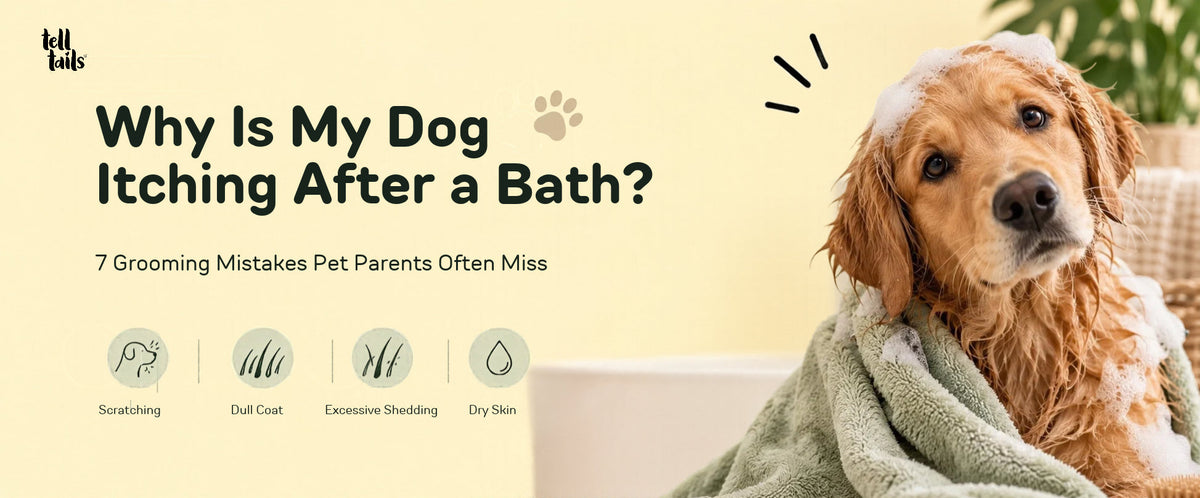
Why Is My Dog Itching After a Bath? 7 Grooming Mistakes Pet Parents Often Miss
You give your dog a bath expecting a cleaner coat, fresher smell and one very fluffy pet.
Then the scratching starts.
If your dog seems itchy, dry or uncomfortable after bath time, it’s easy to assume that bathing itself is the problem. But often, it isn’t the bath it’s something within the grooming routine that needs attention.
A dog’s skin and coat have different needs from ours, which is why everything from the shampoo you choose to how thoroughly you rinse can make a difference.
Here are seven common grooming mistakes worth checking.
1. Using Human Shampoo on Your Dog
Your shampoo may say “gentle,” “natural” or “moisturising” but that doesn’t automatically make it suitable for your dog.
Human and canine skin differ, including in their typical pH. Products formulated for human skin can therefore be inappropriate for regular use on dogs and may contribute to dryness or irritation.
The simpler rule?
Use grooming products specifically formulated for pets.
That one switch can make a dog’s bath routine much more appropriate for their skin and coat.
2. Choosing Shampoo Only by Fragrance
We understand the temptation.
A shampoo smells amazing, the packaging looks great, and you immediately imagine your dog smelling fresh after their bath.
But fragrance shouldn’t be the only thing you look at. Turn the bottle around.
Look at what the product is formulated for, its ingredients and whether it suits your dog’s particular grooming needs.
At Tell Tails, this is something we think about constantly: good grooming should start with what’s inside the bottle, not simply how the bottle looks on the shelf.
3. Not Rinsing the Coat Thoroughly Enough
Lather. Rinse. Done? Not always.
One of the easiest grooming mistakes to make is leaving shampoo residue behind, particularly when your dog has a thick or long coat.
Residual products can irritate the skin, so rinsing thoroughly matters. Pay extra attention to harder-to-rinse areas and keep going until the coat no longer feels slippery or soapy.
Sometimes the problem isn’t the shampoo itself.
It’s the shampoo that never completely left the coat.
4. Assuming Every Itch Needs an “Anti-Itch” Shampoo
Your dog is scratching, so naturally you start looking for a shampoo for itchy skin.
But itching is a symptom, not a diagnosis.
Dryness may be one reason a dog scratches, but allergies, parasites, infections and other skin conditions can also cause itching.
A grooming product can support routine skin and coat care, but persistent, severe or recurring itching deserves veterinary attention rather than endless product switching.
Knowing when grooming is enough and when your dog needs a vet is part of responsible pet care too.
5. Ignoring What Your Dog’s Coat Is Telling You
A dog’s coat can communicate more than we realise.
Have you noticed:
- Frequent scratching?
- Flaky or visibly dry skin?
- A coat that suddenly looks dull?
- Unusual shedding?
- Changes in texture?
- Persistent odour even after bathing?
These signs don’t automatically mean something is seriously wrong, but they’re worth noticing.
Instead of thinking of grooming as something we do only when a dog looks dirty, it helps to see bath time as an opportunity to check their skin and coat.
The more familiar you are with what is normal for your dog, the easier it becomes to notice when something changes.
6. Thinking More Shampoo Means a Better Clean
More foam doesn’t necessarily mean a cleaner dog.
Using excessive products can make shampoo harder to rinse completely from the coat.
What matters more is using an appropriate amount, distributing it properly and following the product directions.
A good grooming routine doesn’t need to be complicated.
The right product + the right technique + consistency beats simply using more product.
7. Treating Grooming as Just a “Beauty Routine”
This might be the biggest misconception of all.
Dog grooming isn’t simply about getting the perfect fluffy-coat photo afterwards.
Routine grooming gives pet parents a chance to notice changes in the skin, coat, paws and overall condition of their dog.
It’s maintenance.
It's an observation.
And yes, it’s also one of those everyday rituals that can become quality time between you and your pet.
So, What Should a Good Dog Bath Routine Look Like?
Keep it simple.
Brush out loose hair or tangles when appropriate before bathing. Use lukewarm water and a dog-specific shampoo suited to your pet’s grooming needs. Massage gently rather than aggressively scrubbing the skin.
Most importantly, rinse thoroughly.
Dry the coat properly afterwards, paying particular attention to dogs with thick coats, folds or areas where moisture can remain trapped.
And if your dog has ongoing redness, lesions, significant hair loss, persistent itching or recurring skin problems, speak to your veterinarian.
The Ingredient List Deserves Your Attention Too
Pet parents are becoming more conscious of what goes into the products they use every day and pet grooming should be no different.
At Tell Tails, our approach to grooming is built around making everyday pet care gentler and more thoughtful, with dog grooming products developed around purposeful ingredients and everyday coat-care needs.
Because the goal of a bath shouldn’t simply be:
“My dog smells clean.”
It should also be:
“I feel good about what I’m using on my dog.”
The Takeaway
Your dog can’t turn the shampoo bottle around and read the label.
You can.
And sometimes better grooming doesn’t require adding ten new steps to your routine.
It starts with paying attention to the small ones:
What are you using?
Are you using it correctly?
Are you rinsing thoroughly?
And most importantly what is your dog’s skin and coat telling you?
Because good grooming isn't only about a cleaner coat.
It’s about more thoughtful everyday care.
Tell Tails
Herbal Care. Happy Pets. Love Pets